Amend existing criteria to make the Aswesuma Welfare Benefits Payment Scheme more effective – Committee on Public Finance instructs officials
- Conduct an independent evaluation of all welfare projects including all welfare and development programs carried out by the Department of Samurdhi Development – Committee on Public Finance recommends
The Committee on Public Finance instructed the officials of the Welfare Benefits Board to amend the existing criteria to make the Aswesuma Welfare Benefits Payment Scheme more effective.
Since various issues have arisen in relation to the existing 22 criteria used to determine the eligibility of individuals for the current Aswesuma Welfare Benefits Payment Scheme, officials were instructed to take measures to select future Aswesuma beneficiaries under new criteria.
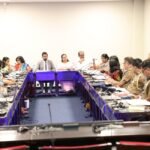
These matters were discussed when the Committee on Public Finance (COPF), chaired by Hon. Member of Parliament Dr. Harsha de Silva, met on 08.01.2026 at Parliament.
At this meeting, the extension of the Aswesuma Welfare Benefits Payment Scheme declared under Section 9 of the Welfare Benefits Act No. 24 of 2002, as published in the Extraordinary Gazette No. 2467/03 dated 15.12.2025, was considered.
At that point, it was stated that among the categories of transitional, vulnerable, poor and extremely poor beneficiaries who received benefits under the Aswesuma Scheme, the provision of benefits to the transitional category ended on 30 April 2025. Accordingly, officials of the Welfare Benefits Board stated that under the proposed new amendments to the Aswesuma Welfare Benefits Payment Scheme, benefits will be paid to the vulnerable, poor and extremely poor categories. However, considering the potential socio-economic issues that may arise in the future due to unexpected disaster situations, the officials further stated that payments to the vulnerable category, which were scheduled to end on 31.12.2025, are proposed to be extended until June 2026. Furthermore, they informed the Committee that assistance provided to persons with disabilities, persons receiving kidney assistance, and elderly assistance will continue.
During the discussions, the Committee inquired from the officials of the Department of Samurdhi Development regarding the tasks carried out by the Department. The officials stated that necessary activities and projects are being implemented for the systematic empowerment of 2 million families. The Committee also inquired regarding the annual expenditure incurred for administrative processes including the payment of salaries of the Department of Samurdhi Development. Accordingly, officials informed the Committee that approximately over Rs. 22 billion is spent annually and that Rs. 27.38 billion has been allocated for the year 2026 for salaries and relevant empowerment activities.
Expressing views at this point, the Chair of the Committee questioned how effective it is to allocate a significantly large sum of money for administrative activities including salaries, compared to the empowerment activities carried out by the Department of Samurdhi Development. The Chair further questioned whether any post-review or evaluation has been conducted regarding the community development projects implemented by the Department. The officials informed the Committee that no such evaluation has been carried out. Accordingly, the Committee on Public Finance recommended to the Ministry of Finance that all welfare and development programs carried out by the Department of Samurdhi Development, including all other welfare projects, be subjected to an independent evaluation.
Participating in this meeting were Hon. Deputy Ministers Nishantha Jayaweera and (Dr.) Kaushalya Ariyarathne, and Hon. Members of Parliament Ravi Karunanayake, Nimal Palihena, Chithral Fernando, Attorney-at-Law, Wijesiri Basnayake, Sunil Rajapaksha, Thilina Samarakoon, and Lakmali Hemachandra, Attorney-at-Law along with several others.