Building a Stronger Dairy Future through Production-Oriented Extension Services in Northern Province

Sagarika Hitihamu – Senior Research Officer Hector Kobbekaduwa Agrarian Research and Training Institute (HARTI)
The Hector Kobbekaduwa Agrarian Research and Training Institute (HARTI) is currently conducting a research study titled “Strengthening Livestock Extension Services: Identifying Challenges, Gaps, and Developing Strategies to Enhance Dairy and Goat Production in Sri Lanka.” The study was carried out in the Northern Province, with primary data collected from the Jaffna and Kilinochchi Districts. Livestock extension services in this region cover multiple sectors, and this article aims to describe the service areas considered, highlight existing strengths, and discuss ways to further strengthen extension services to improve animal husbandry practices and livestock productivity.
Livestock Farming Systems in the Northern Province
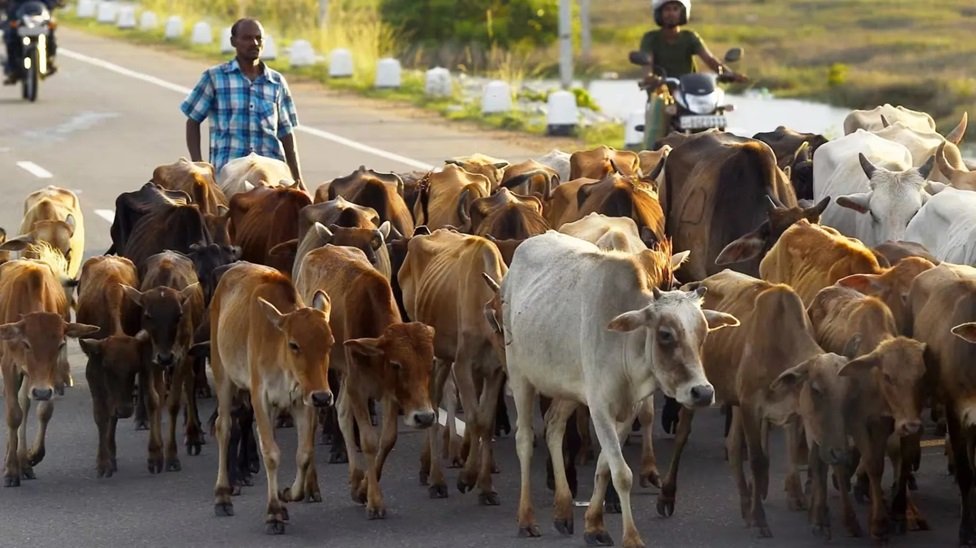
Distinct differences exist between livestock farming systems in northern province is that in Jaffna, most dairy farmers rear improved cattle breeds under semi-intensive management systems, whereas in Kilinochchi, livestock farming is largely extensive, with farmers managing relatively large herds. These differences require location-specific extension strategies to ensure effective service delivery and productivity improvement.
Strengthening Breeding and Animal Health Services
To improve livestock quality, productivity, and traceability, systematic breeding and animal health programmes are being implemented in the Northern Province. Animal identification has been strengthened through the provision of ear tags, enabling improved record-keeping and monitoring. Farmers are encouraged to cooperate with extension officers to ensure proper registration of their animals.
Artificial insemination services are widely available and supported by follow-up activities, including pregnancy diagnosis conducted approximately one and a half months after insemination. Repeat insemination services are provided where necessary. In island and free-grazing areas, natural breeding is promoted using improved bulls. To prevent uncontrolled breeding, surplus bulls are castrated, while high-quality AI-bred bulls are distributed among farmers to enhance herd genetics.
Vaccination remains a key priority, particularly in high-risk areas such as Vanni, Mullaitivu, and Mannar, where livestock face increased disease risks due to wildlife interaction. Farmers are strongly advised to adhere to vaccination schedules to protect animal health and prevent disease outbreaks.
Milk Marketing and Collection Systems
Milk marketing infrastructure in the Jaffna District is relatively well developed. Major milk collectors, including Cargills, Nestlé, and MILCO, collectively procure approximately 65,000 litres of milk per day. In addition, the Jaffna District Development Cooperative Society supports around 1,000 smallholder dairy farmers and collects nearly 4,000 litres of milk daily. These organized collection networks provide reliable market access and income stability, encouraging farmers to remain engaged in dairy production.
Livestock Extension Services and Farmer Support
Livestock extension officers play a crucial role in supporting farmers through farm visits, training programmes, and technical guidance. Officers are generally available for field-level services after 10:30 a.m. Extension activities are further strengthened through collaboration with private sector organizations, non-governmental organizations, universities, and research institutes, allowing farmers to benefit from a wide range of expertise and innovations.
Key Challenges in Extension Service Delivery
Despite ongoing efforts, several challenges continue to affect the effectiveness of extension services. Staff shortages remain a major constraint, particularly in remote and extensive farming areas, resulting in delays in service delivery. Farmer participation in training programmes has declined, especially among younger farmers. In addition, insufficient attention to preventive animal healthcare has led to avoidable livestock losses and reduced productivity.
Importance of Preventive Animal Healthcare
Field-level observations highlight that many cattle deaths, particularly during calving, could be prevented through simple and low-cost interventions. Regular deworming and the administration of toxoid injections approximately three months before calving—costing around Rs. 100 per animal—can significantly reduce mortality and health complications. Extension officers emphasize that preventive care is both more effective and more economical than treating animals after losses occur.
Farmer Feedback and Institutional Response
A frequently raised concern among farmers is the limited availability of veterinary surgeons during emergency situations. The Department of Animal Production and Health acknowledges these challenges and is taking steps to address staffing and logistical limitations. In the meantime, farmers are encouraged to strictly follow recommended preventive health and management practices to reduce the likelihood of emergencies.
Innovations and Future Directions
In partnership with development agencies such as JICA and other NGOs, several innovative initiatives are being introduced, including integrated livestock development projects and structured training and monitoring systems for farmers receiving livestock support. These initiatives aim to ensure more effective use of resources and sustainable improvements in livestock productivity.
The Way Forward: A Shared Responsibility
The key message emerging from this article is that the success of livestock extension services depends not only on the services provided by the Department of Animal Production and Health of the Northern Province, but also on the willingness of farmers to actively engage with extension officers and adopt recommended practices. Farmers are encouraged to participate in training programmes, implement preventive health measures, and continuously focus on productivity enhancement while adhering to good agricultural practices, clean milk production standards, and animal welfare principles. Strengthening collaboration between institutions and farmers will be essential for building a productive, resilient, and sustainable dairy and livestock sector in Sri Lanka.