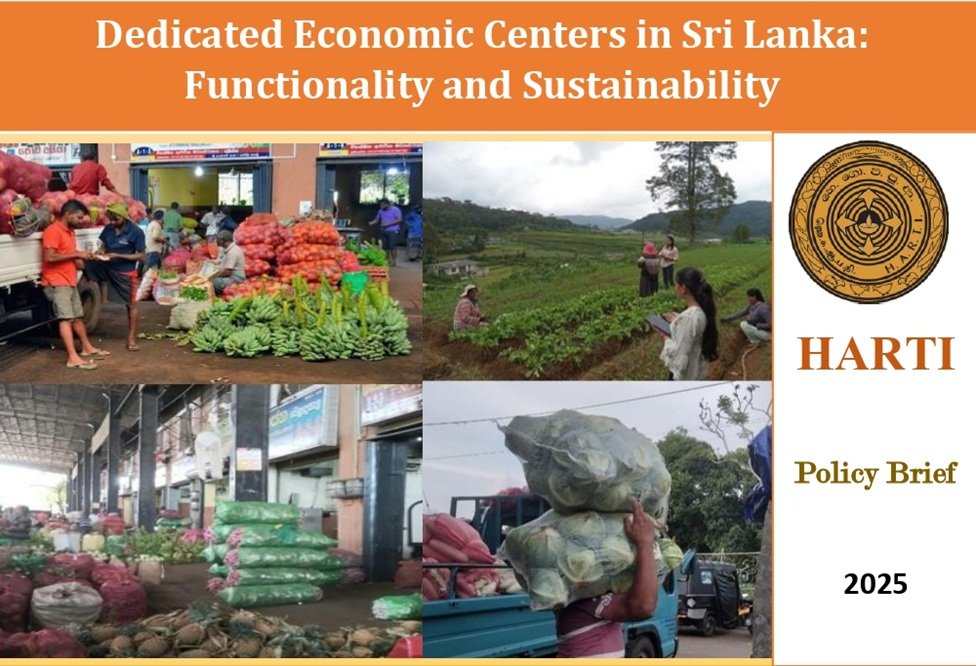
HARTI Policy Brief 2025: Dedicated Economic Centers in Sri Lanka: Functionality and Sustainability
Background
Dedicated Economic Canters (DECs) were established in Sri Lanka as part of a national initiative to enhance the agricultural marketing infrastructure. Their primary objectives were to ensure fair prices for producers, affordable food for consumers, and reduced transaction costs along the supply chain. Launched in 1999, these centers were designed to serve both producing and consuming regions through centralized, regulated marketplaces. Although 15 DECs are currently operational across the country, concerns have arisen regarding their effectiveness, governance, and ability to achieve their intended goals. This study was undertaken to provide a comprehensive assessment of the functionality and sustainability of all active DECs in Sri Lanka.
Given the vital role of DECs play in linking farmers to markets, this study holds significant relevance in today’s policy context especially amid growing concerns over price volatility, post-harvest losses, and stakeholder dissatisfaction. It seeks to answer key questions about the institutional, administrative, and operational performance of DECs and evaluates their functionality and long-term viability.
Methodology
The research employed both primary and secondary data sources, including key informant interviews, stakeholder surveys, direct field observations, and document reviews. A total of 390 respondents were interviewed, encompassing a diverse range of stakeholders such as DEC merchants, wholesalers and retailers, farmers, consumers, transporters, security personnel, and porters (“Nattami”). The study utilized the Market Functionality Index (MFI) as a framework to qualitatively assess nine critical dimensions of market performance: assortment, availability, pricing, supply chain resilience, competition, infrastructure, services, food quality, and accessibility. Further analysis was conducted on sustainability aspects, focusing on financial management, trade union involvement, management practices, and inclusivity.
Findings
The findings highlight significant variation in performance across DECs. Well-functioning centres such as Dambulla, Thambuttegama, Keppetipola, Peliyagoda, Meegoda, Veyangoda, Narahenpita, Norochchole and Nuwara Eliya demonstrate operational maturity and strong stakeholder engagement. In contrast, centres like Embilipitiya, Ampara, and Kurunduwatta face issues such as underutilization, weak governance, and inadequate infrastructure.
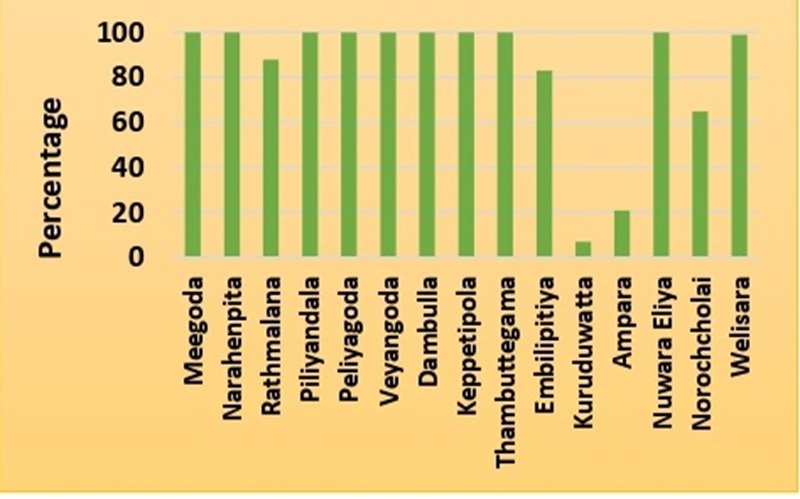
Source: HARTI survey data, 2024 – Figure 1: Functioning levels of the DECs in Sri Lanka
Many DECs lack basic facilities, including cold storage, packaging, protective roofing, sanitation, and waste management systems. Market inefficiencies are intensified by the dominance of intermediaries, limited pricing transparency, and the slow adoption of digital trading platforms.
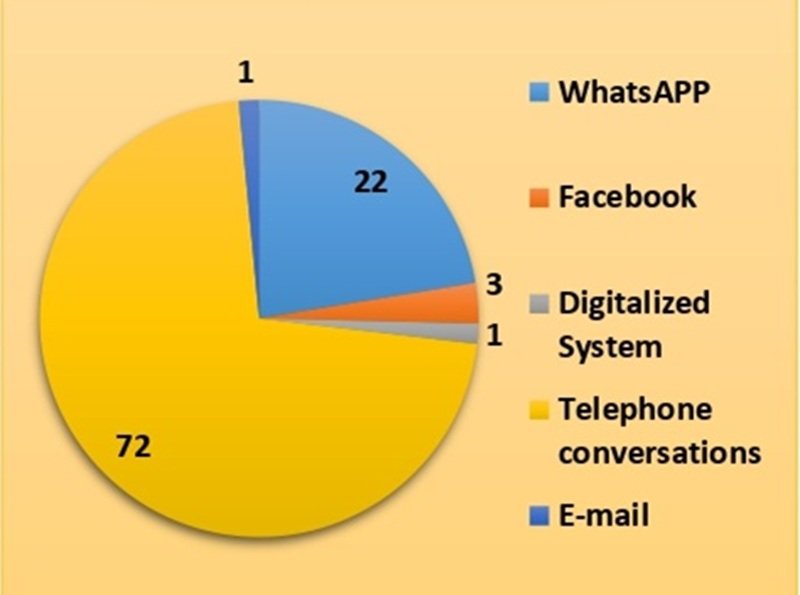
Source: HARTI survey data, 2024 – Figure 2:Source of Access to Information
Additionally, expired lease agreements, the absence of standardized governance frameworks, and low stakeholder participation further undermine the sustainability of these canters.
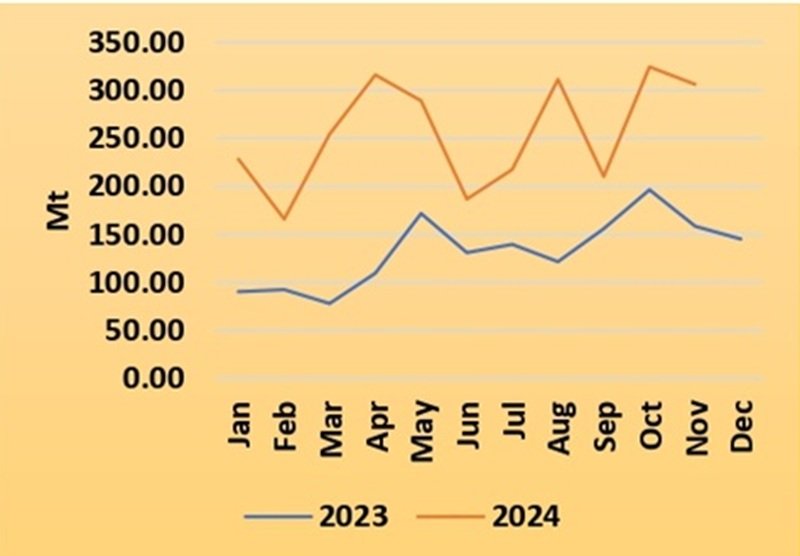
Source: Dambulla Municipal Council – Figure 3: Monthly Average Wastage Received from Dambulla DEC in 2023-2024
Post-harvest losses particularly in high-volume markets like Dambulla remain a major challenge, often driven by oversupply and insufficient storage facilities. Despite being embedded within the national agricultural policy framework, there is a noticeable gap between policy objectives and ground-level implementation.
Recommendations
The operational disparities among DECs indicate the need for uniform standards in governance, infrastructure, and service provision. Without strategic intervention, underperforming DECs will continue to undermine national food distribution systems and farmer welfare. Revamping DECs is essential to support the national agricultural policy goals of market-led Agri-entrepreneurship and rural transformation.
- Strengthen Infrastructure: Invest in cold storage, roofing, sanitation, and waste management and packing centers to reduce losses and improve hygiene.
- Institutional Reforms: Establish a unified governing body, standardize lease agreements, and restructure management trusts.
- Improve Transparency: Promote digital platforms for payments and price display to reduce information gaps and unfair practices.
- Enhance Inclusivity: Simplify market entry for new entrepreneurs and provide targeted support for small-scale farmers.
- Sustainable Practices: Develop robust west management system in collaboration with local authorities.
- Monitor and Evaluate: Implement regular performance monitoring using MFI indicators to guide targeted interventions.
Research Team: Prasanna Wijesinghe, N. P. G. Samantha, Jayamini Champika, Sangeeth Fernando, Anupa Dissanayake, Duminda Priyadarshana, M. R. F. Saffra
Hector Kobbekaduwa Agrarian Research and Training Institute – 114, Wijerama Mawatha, Colombo 07, Sri Lanka – http://www.harti.gov.lk/