Strengthening Livestock Extension Services to Enhance Dairy and Goat Production in the Eastern Province
- Editor
- October 22, 2025
- Health, News
- environment, Health
- 0 Comments

Sagarika Hitihamu
The Hector Kobbekaduwa Agrarian Research and Training Institute (HARTI) is currently conducting a research study titled“Strengthening Livestock Extension Services: Identifying Challenges, Gaps, and Developing Strategies to Enhance Dairy and Goat Production in Sri Lanka.” As part of this study, a Focus Group Discussion (FGD was conducted in Batticaloa District of the Eastern Province with key officials from the Department of Animal Production and Health (DAPH). This article presents district-level insights on livestock extension service delivery, prevailing challenges, and potential strategies to strengthen dairy and goat production systems in the Eastern Province.
Livestock Farming Systems in the Eastern Province
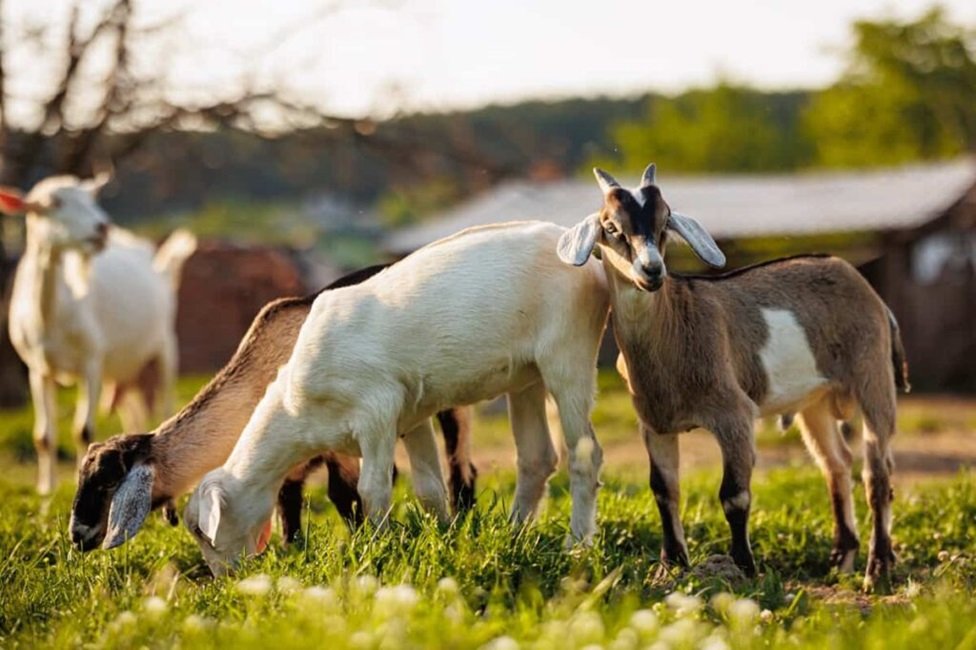
Livestock farming in the Eastern Province, particularly in Batticaloa District, is predominantly characterized by smallholder mixed farming systems, where dairy cattle and goats are reared alongside crop production. Most farmers depend on traditional husbandry practices, with extensive and semi-intensive systems being common. Goat rearing largely follows free-grazing systems, while dairy farming relies on natural feed resources with limited use of improved feeding technologies. These production systems require location-specific and resource-appropriate extension approaches to effectively improve productivity and sustainability.
Breeding and Animal Health Services
Livestock extension services in Batticaloa District focus on providing technical support and veterinary services through divisional veterinary offices. Artificial insemination (AI) services are available under the Department of Animal Production and Health; however, natural breeding remains the dominant practice, particularly among goat farmers, due to limited accessibility and logistical constraints. Extension officers provide advisory support on breeding management to improve reproductive efficiency under existing farming conditions.
Animal health services are supported through the Veterinary Investigation Centre in Batticaloa, which plays a key role in disease surveillance, diagnostics, and vaccination coordination. Annual mass vaccination campaigns are conducted against major endemic disease, Batticaloa is recognized as a priority district for Foot and Mouth Disease (FMD) control, given its livestock population and disease risk profile, highlighting the importance of preventive animal healthcare in the region.
Milk Marketing and Collection Systems
Milk marketing in Batticaloa District is primarily facilitated through local milk cooperative societies and the MILCO milk procurement network. Farmers supply milk to established collection centers coordinated by farmer organizations and cooperatives. According to Department of Animal Production and Health records, approximately 4.48 million liters of milk are collected annually in Batticaloa District through formal channels. Despite this, limited coverage of collection centers and logistical challenges restrict the full integration of smallholder farmers into organized milk marketing systems.
Livestock Extension Services and Farmer Engagement
Livestock extension services in Batticaloa are delivered through individual farm visits, group training programs, demonstration farms, and mobile-based advisory services. Farm visits provide site-specific technical guidance, while group trainings and demonstrations support knowledge sharing and technology adoption. Extension and veterinary offices operate from 9.00 a.m., ensuring farmer access to services during official working hours. Farmer engagement occurs daily, with some divisional offices conducting weekly scheduled meetings depending on staff availability and field conditions.
Extension activities are implemented in collaboration with MILCO, farmer organizations, and non-governmental organizations (NGOs), which contribute technical assistance, training support, and farmer mobilization.
Key Challenges in Extension Service Delivery
Despite ongoing efforts, several constraints limit the effectiveness of livestock extension services in Batticaloa District. Staff shortages increase workloads and reduce the frequency of farm visits and follow-up activities. Transportation limitations, including the lack of vehicles and low fuel allocations, significantly restrict officers’ ability to reach remote farming communities. Budget constraints and inadequate infrastructure further affect training delivery and field operations.
Additional challenges include limited access to ICT tools, low farmer participation due to busy livelihoods, and shortages of veterinary drugs, which often result in officers providing prescriptions rather than direct treatment. These constraints collectively reduce the timeliness and quality of extension services, particularly for remote and marginalized farming communities.
Gaps Between Services and Farmer Needs
The Focus Group Discussion revealed that current extension services partially meet farmer needs. Farmers frequently seek guidance on artificial insemination, feeding practices, vaccinations, and disease control, but these areas are not consistently addressed due to limited resources and field coverage. Irregular farm visits and limited hands-on support further widen the gap between farmer expectations and service delivery outcomes.
Strategies and the Way Forward
Recent efforts to improve extension delivery in Batticaloa include capacity-building programs conducted through government training centers such as the Kallady Training Centre, in collaboration with the Provincial Skills Development and Entrepreneurship Network (PSDEN). These initiatives focus on strengthening technical capacity within existing institutional frameworks. However, extension staff reported limited exposure to international extension models or innovations, relying primarily on departmental extension approaches prescribed by DAPH.
To enhance effectiveness, extension officers proposed mobile-based advisory services, improved transport facilities, multimedia-based farmer training, strengthened smart borewell facilities, expanded public–private partnerships, and regular monitoring and evaluation mechanisms. Importantly, extension staff expressed strong willingness to participate in follow-up discussions and capacity-building workshops to further improve service delivery.
Conclusion: Toward a Stronger Livestock Extension System in the Eastern Province
The findings from Batticaloa District highlight that strengthening livestock extension services in the Eastern Province requires targeted investments, improved mobility, enhanced digital tools, and stronger institutional collaboration. While extension officers remain committed and technically capable, addressing structural constraints and improving farmer engagement are critical for enhancing dairy and goat productivity. A more farmer-centered, resource-responsive, and technology-enabled extension system will be essential for building a resilient and sustainable livestock sector in the Eastern Province and contributing to national food security and rural development goals.