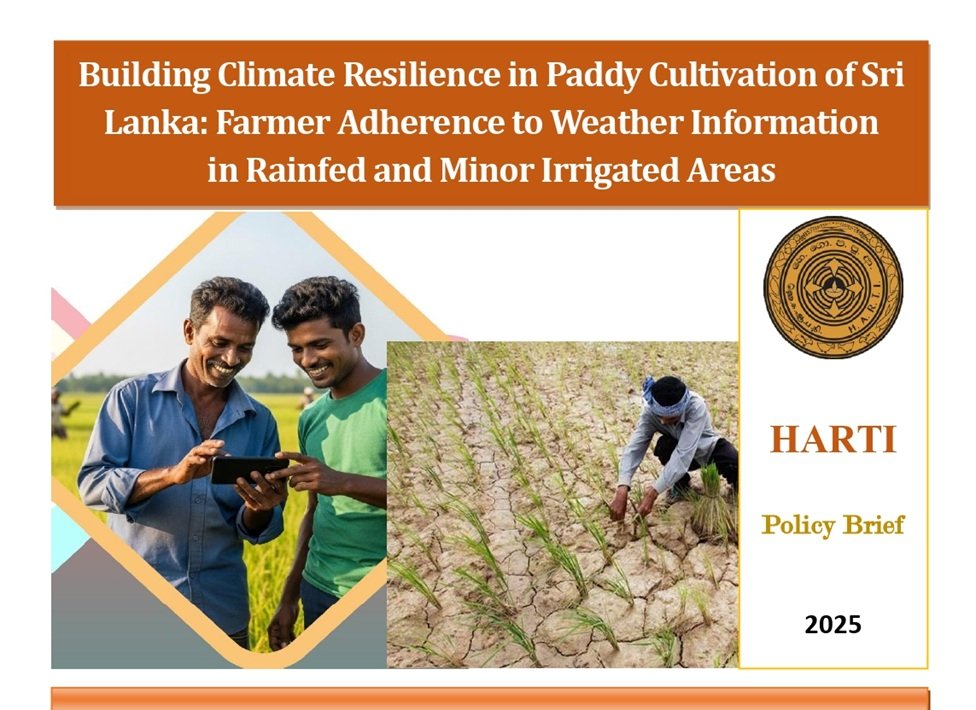
Building Climate Resilience in Paddy Cultivation of Sri Lanka: Farmer Adherence to Weather Information in Rainfed and Minor Irrigated Areas
- Editor
- March 15, 2026
- News, Travel & Nature
- Travel & Nature
- 0 Comments
Background
Climate variability plays a major role in shaping agricultural productivity, rural livelihoods and economic outcomes at local, regional and national levels. Farmers regularly confront the challenge of making management decisions under uncertain conditions. In Sri Lanka, agriculture is particularly vulnerable to climate shocks and shifting weather patterns, often experiencing more severe impacts than many other nations. Farmers face the ongoing challenge of making management decisions amid climate uncertainty. Hence, this study focused on examining whether and how smallholder paddy farmers in Sri Lanka incorporate weather information into their crop management strategies. It also aimed to ep[;’34valuate the potential benefits of using such information and to explore the opportunities and challenges in leveraging climate data to build more resilient agricultural systems.
Methodology
Paddy farmers were chosen due to paddy’s dominance in Sri Lanka and the sector’s strong institutional support. This study conducted in 2024 based on a sample of 445 paddy farmers from the dry zone districts of Kurunegala (N=116), Anuradhapura (N=163), Ampara (N=44), Batticaloa (N=96) and Vavuniya (N=26) in Sri Lanka. This covered prominent rainfed and minor irrigated paddy cultivating districts in Sri Lanka
Key Findings
The study revealed that most of the paddy farmers in the sample were aware of the existing mechanisms for disseminating weather information in Sri Lanka. Key initiatives—such as pre-season meetings conducted by the Department of Agrarian Services (DAD), the Wewgam Pubuduwa program by the Department of Irrigation and the Climate Smart Irrigated Agriculture Project (CSIAP) by the Ministry of Agriculture — were identified as widely recognized and accessible within farming communities.
The study found that the majority of farmers (78%) primarily relied on television for climate-related updates. Digital communication methods, such as mobile apps, text messages and voice messages were also effectively reaching farmers. These findings highlight the successful integration of both traditional and modern communication channels in delivering climate information to the farming community.
Of the total sample, 97% of farmers reported receiving weather information primarily from government organizations. The Department of Meteorology (DoM), Department of Agriculture (DoA) and Department of Agrarian Development (DAD) were identified as the main sources. These agencies played a crucial role in providing weather information to support farmers’ agricultural practices and decision-making.
Nearly half of the sample farmers relied on television for accessing weather information and around 28% used smartphones, particularly among younger farmers familiar with modern technology. However, about 8% of farmers did not use any technological devices to access weather information, indicating gaps in technology adoption among certain segments of the farming groups.
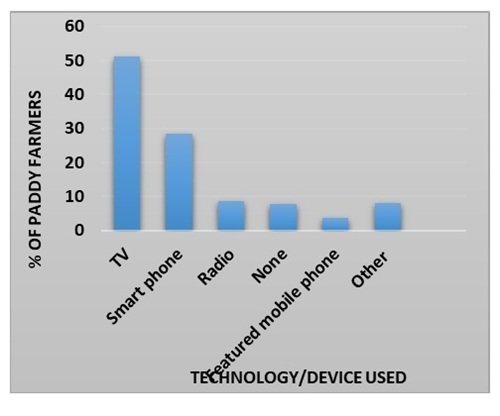
Figure 1: Technology/Device Used to Access to Climate Information
Weather forecasts were the most commonly shared form of weather information, printed media also proved highly effective, reaching all farmers in the sample. These findings highlight the widespread use of both electronic and traditional media in disseminating weather information to the farming community.
Findings reveal that 64% of farmers accessed weather information occasionally, while 31% accessed it frequently. Over half of the farmers (51%) found weather information sources to be highly accessible and 56% considered the information clear. However, language barriers impacted the clarity of communication, particularly in linguistically diverse areas such as Vavuniya, Batticaloa and Ampara were relying on a single language for dissemination was discouraged.
Of the total sample, 40% of farmers used weather information to inform their farming decisions. However, nearly 13% of farmers, despite receiving weather information, did not incorporate it into their decision-making, instead relying on their own experience and traditional knowledge, which they trusted more than external climate information sources.
The study revealed that weather information played a crucial role in guiding key agricultural decisions with 71% of farmers using it to determine land preparation timing and 70% for harvesting. These findings highlight how weather information helps farmers align their practices with weather patterns, thereby improving efficiency and productivity in paddy farming.
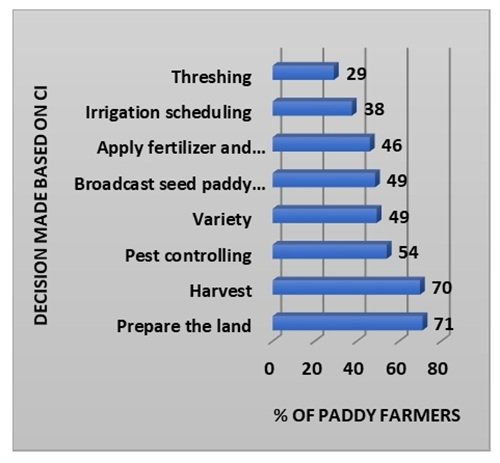
Figure 2: Decisions made based on Weather Information
Among the sample, 63% of paddy farmers used Weather information to mitigate crop losses caused by climate hazards such as droughts and floods. Additionally, 48% of farmers reported improved resource management, including more efficient use of land, labor and inputs by incorporating climate information into their decision-making.
The findings revealed that 53% of farmers did not receive regularly updated weather information while 33% faced poor network coverage and 30% lacked compatible electronic devices to access climate data. These challenges highlight the need for improved infrastructure, more consistent updates and the provision of appropriate technology to enhance weather information accessibility for all farmers.
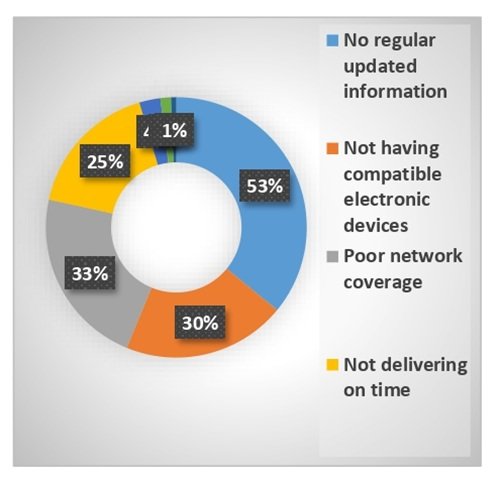
Figure 3: Problems Faced by Paddy Farmers in Accessing Weather Information
Of the total sample, 23% of farmers emphasized the need for more reliable and accurate weather information, 20% called for more frequent updates and 19% highlighted the importance of timely dissemination. These suggestions reflect farmers’ desire for consistent, accurate and up-to-date weather information to support informed decision-making and strengthen the resilience of their farming practices.
Access to weather information for farmers is influenced by factors such as internet availability, regional disparities, clarity of communication and sources such as media and peer networks. In paddy cultivation, the usefulness of weather information for decision-making is shaped by the clarity of the information, its perceived benefits, and the effectiveness of pre-season meetings and ease of access.
Policy Directives
- An attitudinal shift should be encouraged among farmers to build greater trust in the reliability and usefulness of weather information provided to them.
- Create awareness among agricultural extension officials about globally updated weather information prediction software (Copernicus).
- The existing government mechanism for weather information dissemination should be strengthened by establishing direct linkages among Agricultural Service Centers (ASCs), the Department of Meteorology and the Natural Resource Management Centre of the Department of Agriculture.
- Weather information dissemination should be promoted through contact farmers, as they are better positioned to understand and address the needs of their fellow farmers.
- Weather information dissemination through digital platforms should be made easily accessible, understandable and available in local languages.
- The use of digital platforms for weather information dissemination should be promoted by young, progressive farmers in the village.
Research Team:
Thushara Dharmawardhana, Dinusha Rathnayake and Sanduni Chathurika
Hector Kobbekaduwa Agrarian Research and Training Institute